

In January, Brisk Teaching announced Curriculum Intelligence - “the first AI that actually knows your curriculum.” They promise that districts will be able to upload their own curriculum and then teachers will generate materials that match their own curriculum. CEO Arman Jaffer explains:
Without being grounded in a district’s existing curricular materials, AI can unintentionally undermine instructional quality rather than strengthen it. While content is easy to generate, what we consistently hear from districts, and what’s hardest to get right, is AI’s alignment to pacing, curriculum, and what’s actually taught.
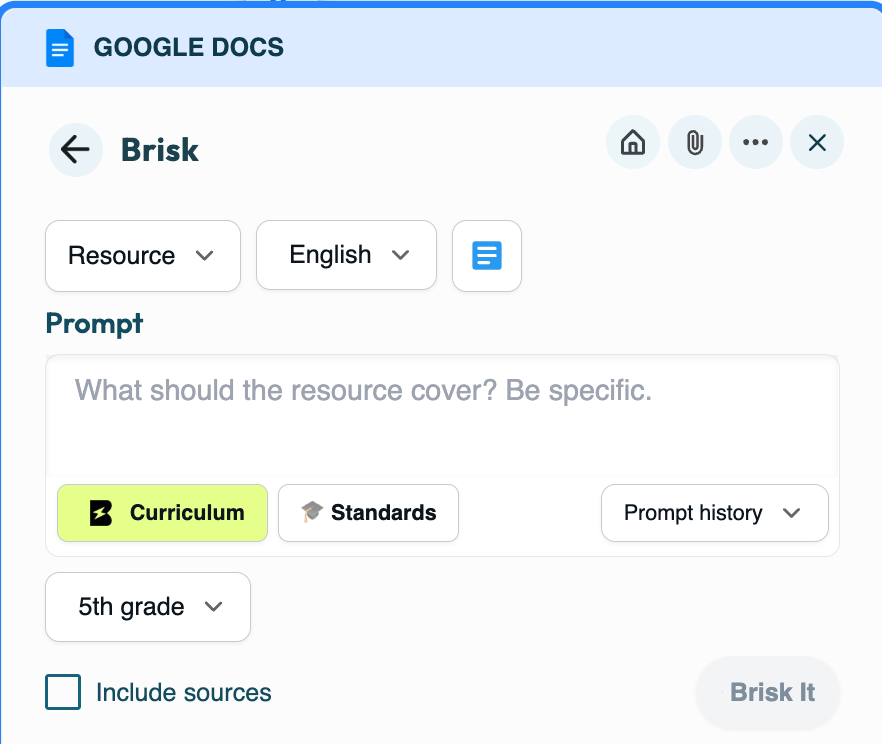
District admins will upload PDFs and spreadsheets of textbooks, teacher pacing guides, sample tests, district policies, and other curriculum data. Brisk tools can then include a portion of that info alongside teacher queries to the LLM, so that the results generations should hopefully be more aligned to what the district is already offering.
It makes sense that AI companies will add these features - districts will pay more for tools that align to their current curriculum. As AI companies move upmarket towards larger districts sales, it’s no surprise that they are adding ability for admins to have more control over the content.
Competitors offer weak or roll your own ways to integrate existing curriculum - but expect that they will incorporate more in the near future. Today, teachers can prompt Gemini or OpenAI directly to please align with XYZ curriculum. MagicSchool claims that their Lesson Plan Generator can ensure lesson plans are coherent with prescribed curriculum - but it requires quite a bit of overhead work from the district & teachers to use a custom tool. These rough edges will smooth out as AI edtech products compete for the big districts.
But will these features actually help students improve their learning?
Teaching to the Test
On the surface, the goals of curriculum alignment seem good. Districts try to align three components: what teachers teach in the classroom, what students read in their textbooks, and what they are tested on. If the teacher says one thing, while the textbook says another, and the student’s test doesn’t reflect either, then they can spend time confused and pulled in different directions. One literature review from 2012 summarizes the evidence supporting benefits to student learning from having aligned curriculum.
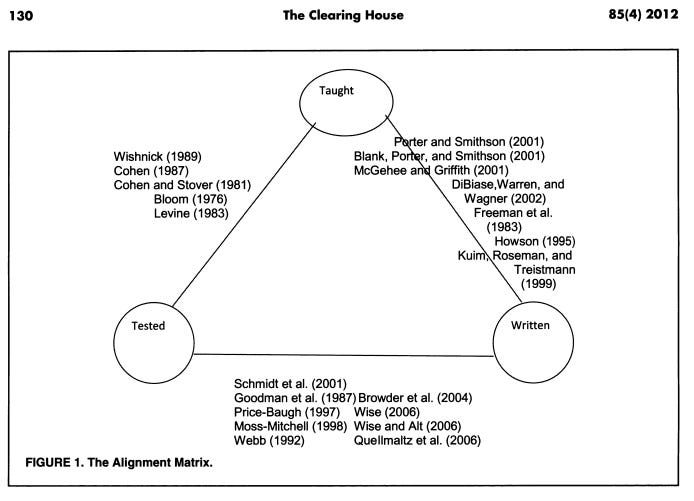
But as districts have pushed harder to have teachers implement aligned curriculum “with fidelity”, there has been significant pushback. If you fully align tested materials with what is taught, then you risk leaving out those important skills that can’t easily be tested. Reading and math receive more emphasis than writing and critical thinking because they can be more easily assessed on state tests. This is known as “curriculum narrowing”- when teachers “teach to the test” they may short change areas that fall outside the well defined path.
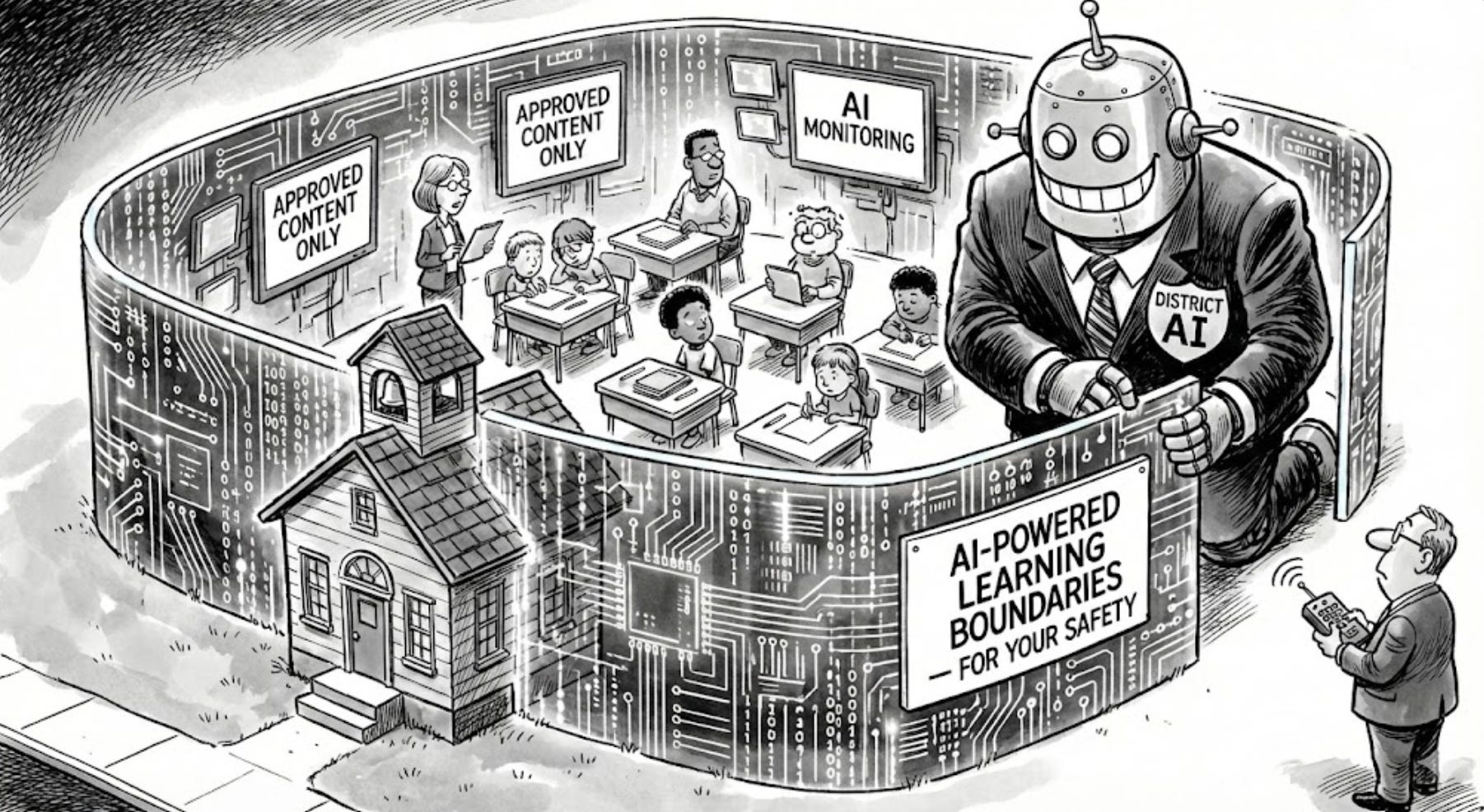
If Brisk’s new tool means that teachers have less freedom to experiment with alternative lesson plans or resources, then it could encourage more narrowing - and remove some of the benefits of having personalized, AI generated resources in the first place.

Bigger context windows may help enforce the status quo
Rapidly improving models enable these new features, but it may not always be for the best.
While Brisk hasn’t yet published exactly how their new system will work - but we can make some guesses. District admins will likely upload materials to a central repository. The materials could include PDFs of scope and sequence docs, spreadsheets with district plans, or even whole textbooks, depending on how its implemented.
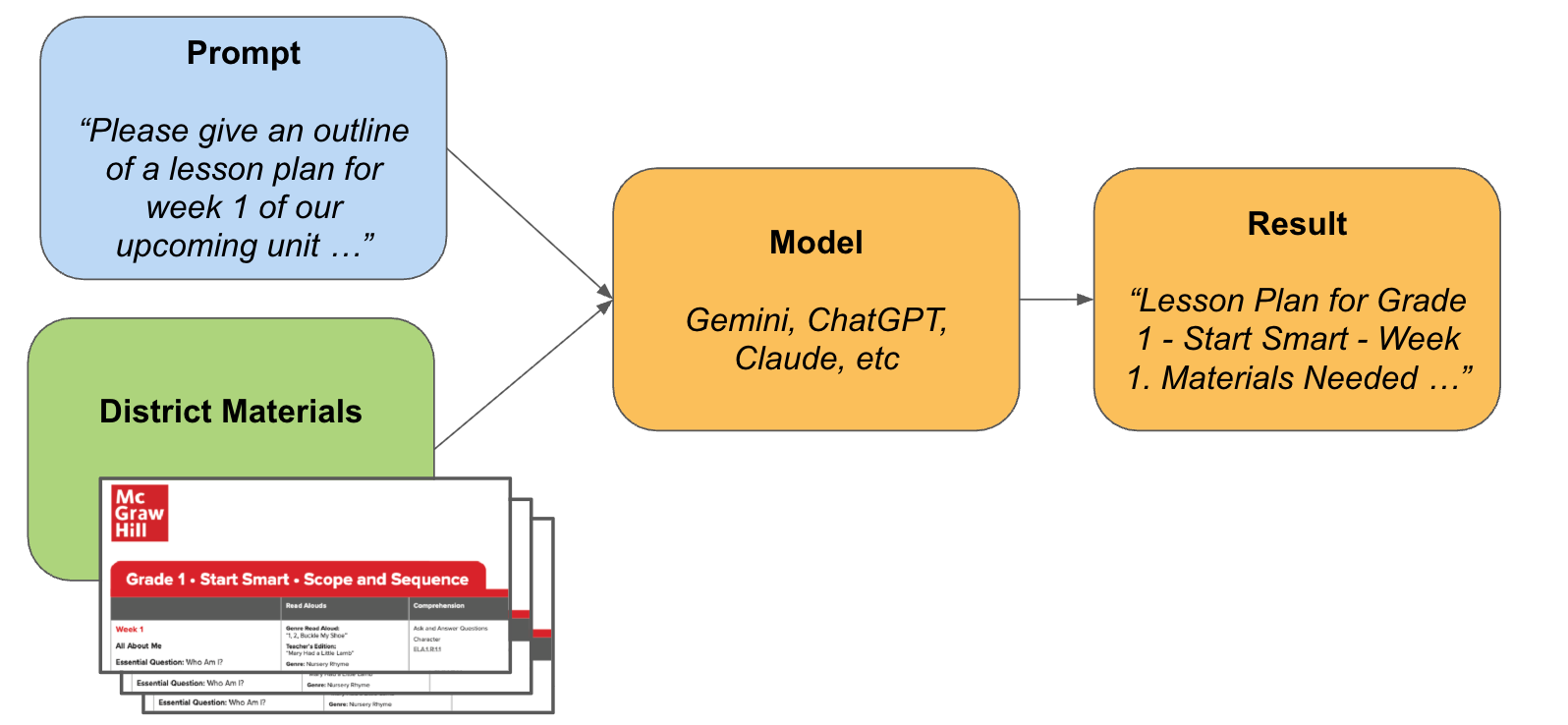
Then, when teachers request a specific tool, Brisk’s agent will determine which materials should be included from the repository, and pass them alongside the prompt to the underlying model. That way, the model can take action with the additional context. It’s like operating with an open book that the model reads in full before every question.
Each model has limits on how much context they can handle, but these are growing rapidly. Only a few years ago, context windows were as low as 8,000 tokens - but more recent models like Gemini 3 and Claude Opus 4.6 can process context of more than a million tokens. And some models are even promising 10 million tokens plus - that’s equivalent to the ballpark of 10,000 to 20,000 pages of documents. Now, the models may not be able to always recall all of the context perfectly, but these new context windows do allow developers to include a lot more than just the user’s prompt.
With more powerful models, AI vendors have a lot more options about how to craft the underlying generation to meet the needs of teachers and students.
Is curriculum alignment the best way to help students?
I am skeptical that more aligned AI outputs will really lead to better results for students. A survey from 2023 by EdReports showed that as more online options are now available, fewer teachers are using standardized resources today - less than half of teachers reported using any aligned curriculum weekly. The availability of supplemental materials long predates AI, but the newer LLMs have supercharged the ability of teachers to pull in and adapt new curriculum for many use cases.
Many times, teachers use AI because the existing curriculum from the district does NOT offer their students what they need. One teacher I spoke with told me that she mainly looks for AI to help when they don’t have a central curriculum, or when it doesn’t work for her students. If the AI vendors force teachers to stay aligned with existing curriculum, then it may undermine the creativity and potential of the tools to offer differentiation or alternate lessons that students may need.
I don’t believe that the ultimate purpose of AI in the classroom is to facilitate a better worksheet aligned to a twenty year old district pacing guide. Instead, we should be building towards agentic workflows that empower teachers to personalize for each student, and tutors that help kids learn at their own pace. By tying these new AI models so closely to existing district silos, we risk hamstringing their potential.
Tools like Brisk’s Curriculum Intelligence will likely help AI vendors close deals with school districts, and provide stronger alignment in the short run. In the best cases, teachers will be able to build lessons that work well within the rest of their schools and classrooms. But in the worst - they may stifle the promise of personalized, AI driven lessons. Time will tell.
Big thanks to Priya Mathew Badger for her feedback on this post - subscribe for excellent tips at her newsletter, Almost Magic.
Love the final draft and the visual! If all AI does is keep students on the narrow path, it will really come up so far short of what impact it can have.
Yes, Worksheets aren’t the best use of AI. It has the potential to be a tireless support mechanism that meets students where they are at…