


Consider the rise of robot-assisted surgery. In recent years, robotic assisted surgery has offered levels of precision and control previously beyond reach. Newer AI systems have taken it to the next level, offering even more autonomy and support, resulting in better outcomes in the operating room.
So, are surgeons being replaced? No, the majority of surgeons see AI as a positive development and are excited about its potential to improve care.
We have not yet seen many robot teachers, but we do see that the majority of teachers say they are using AI. However much of that use is still in one-off, question-and-answer format. The most popular use cases include lesson planning, generating assessments, and adapting materials. But most of the time, the teacher prompts an LLM, and then copy/pastes the results into a doc or slides and moves on. The AI isn’t that actively involved in the teaching itself, most of the time - yet.
In other industries, we are starting to see emergence of much more powerful agents, which can take actions in a loop on behalf of the user. Instead of needing to glue together each step of a workflow. We are starting to see more advanced agents that can take on bigger chunks of work, check the outputs, and then iterate to continue. Some mainstream use cases include email assistants, research tools, sales agents, and automated customer service agents.
We have yet to see this type of autonomous agents in use at large scale in education, but they are coming. Dan Carroll, founder of Clever, said recently
I think 2026 is the year that we see AG Agentic AI make its way into schools.
What will this mean for teachers? Some are worried that AI will replace or disempower teachers. But I think we can learn from the experience of software developers. I want to share my own experience using a coding agent.
Claude Code is the first ubiquitous agent
I have grown to love using Claude Code over the last year. I don’t mean just Claude, which is the LLM offered by Anthropic, but specifically Claude Code. It’s a tool that’s used by developers to automate huge portions of the software engineering workflow.
Claude Code was released just a little over a year ago, but in 2025 it has rapidly became the dominant coding agent for experienced and junior engineers alike. Andrej Karpathy reinforced how transformative this new tool is:
Claude Code (CC) emerged as the first convincing demonstration of what an LLM Agent looks like - something that in a loopy way strings together tool use and reasoning for extended problem solving. … It’s not just a website you go to like Google, it’s a little spirit/ghost that “lives” on your computer. This is a new, distinct paradigm of interaction with an AI.
Claude Code does more than just answer questions. Instead, it can write code, run it, check if it works, and then iterate to make additional improvements, all in a loop and mostly on its own (albeit, with a strong permissions framework).
Instead of making suggestions to the user to take actions, the AI agent itself can take those actions (with permission) to automate more of the process. I have personally had a lot of fun playing with Claude Code. In this year, I have already written more code in 2025 than I had in the three prior years combined.
When I use a chatbot, it feels like I’m talking to an experienced advisor who can give me pointers and advice. But with an AI agent, it feels more like I have a partner who I can delegate tasks to. I still need to supervise the agent, make sure I’m asking the right questions and that its output is sane, but it’s much more empowering.
Here’s one example of how the agent is more helpful than just question-and-answer. I had a recent problem where a build was failing on my machine. I just told Claude Code to make it work:
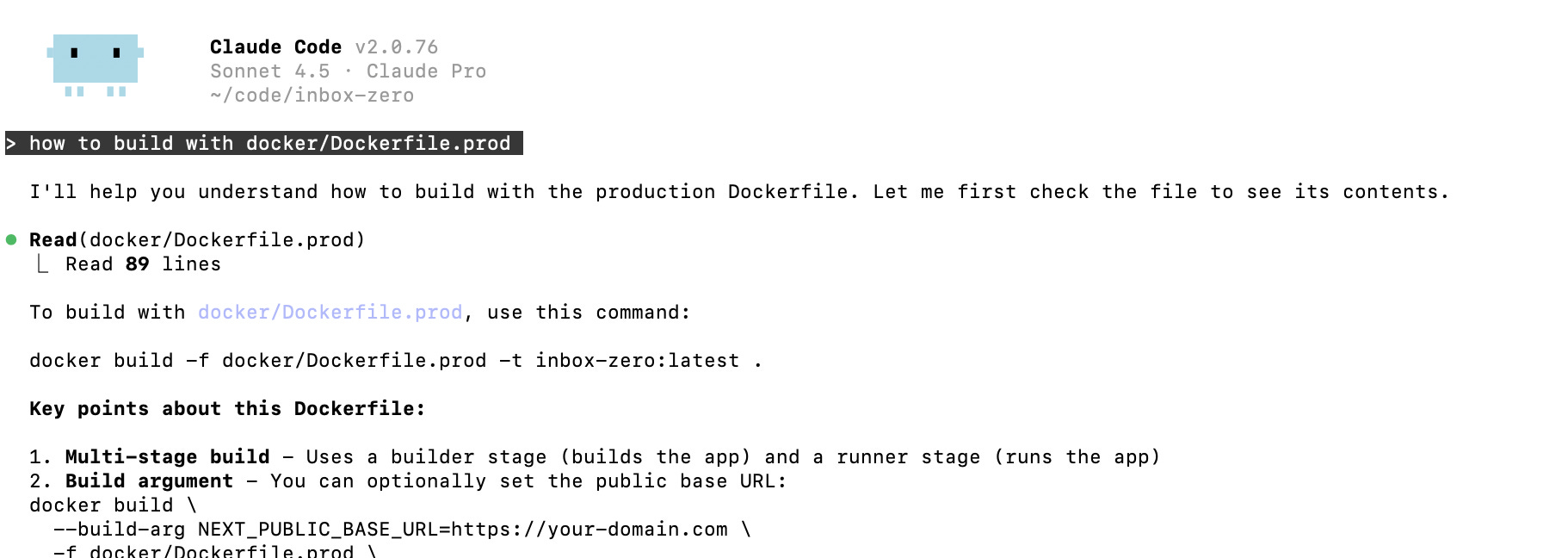
Claude Code didn’t just offer a suggestion. Instead it actually tried to build it, then worked on the problem. It ran the build, saw that it was failing, then tried to fix it a few times. Each time, it tried to rebuild, until it finally figured out the full set of errors - and reported that it was successful:
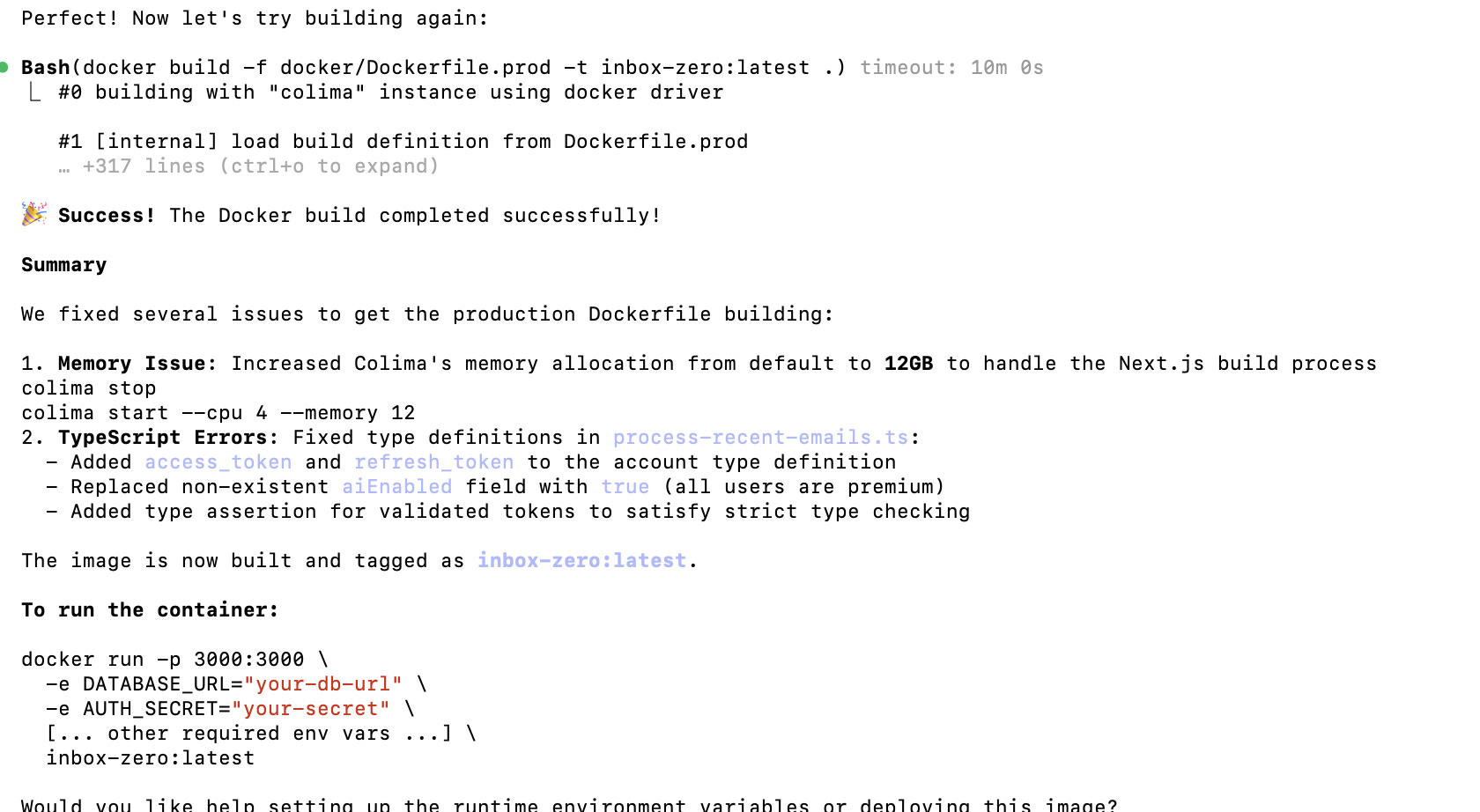
By taking actions on my behalf, the agent can run for longer periods. This doesn’t eliminate the need for engineers - in fact, AI makes each engineer more powerful. Michael Novati of Formation.Dev, points out that the most experienced engineers get a ton of value from the tools:
For senior engineers, AI is leverage. For myself and other senior engineers, AI is not flattening experience. It’s amplifying it. The engineers with the most architectural awareness, the strongest product instincts, and the clearest standards are the ones extracting the most value.
In their book, Vibe Coding, Steve Yegge and Gene Kim identify five dimensions in which AI improves the software engineering experience. It lets engineers:
Write code faster. At its best, AI tools can speed up development tremendously.
Be more ambitious. Projects that once seemed too difficult or time-consuming become feasible.
Be more autonomous. Developers can accomplish tasks autonomously (and in some cases, alone) that otherwise would have required help from teams, freeing them from needing to coordinate with others.
Explore more options. Vibe coding lets you try things out at lower cost, exploring multiple paths in parallel.
Have more fun. Vibe coding lets you spend much more time in the “flow” state, blow through tedious tasks, and shifts the focus from implementation details to building things. At Adidas, they found that vibe coding resulted in developers spending 50% more time in what they called “Happy Time,” productive time when they were mastering their craft.
Vibe coding resulted in developers spending 50% more time in what they called “Happy Time,” productive time when they were mastering their craft.
In one popular study from October 2024, researchers surveyed developers using Github Copilot, the most reported change was that it increased work satisfaction or just felt good. After this, the most common change was that work was less boring since boilerplate and repetitive code was taken off their plates”.
So - vibe coding is improving output, making coding more fun, and giving the most experienced engineers more leverage. Can “vibe teaching” do the same for educators? Can AI make school more enjoyable and effective for teachers and students?
Educators say that AI saves them time
The biggest benefit teachers cite today about use of AI is that it saves time. I see this over and over in studies and reports, and time saving came up as a big factor in my own personal interviews with educators (which will be posted on my podcast soon!)
Gallup ran a survey in June 2025 which claimed that teachers see about 6 hours a week of time savings by using AI tools.
Teachers who engage with AI tools more frequently report greater time savings: Weekly AI users save an average of 5.9 hours each week. …
“Teachers are not only gaining back valuable time, they are also reporting that AI is helping to strengthen the quality of their work,” said Stephanie Marken, senior partner for U.S. research at Gallup.
Another recent, study on teacher use of GenAI found that “the adoption of generative AI tools (like ChatGPT and DeepSeek) is directly associated with increased happiness and reduced stress among faculty.”
In this EdWeek report from last year, teachers went into some real world use cases that highlight how they use AI. A repeated theme is that it saves a tremendous amount of time, and reduces burnout.
“Pierman now uses ChatGPT and other AI-powered tools, like Brisk Teaching, Quizizz, and EdPuzzle, to generate quiz and test questions. …
Before using AI, Pierman had access to one bank of questions, tied to the textbook, that she would pull from. Each chapter has about 150 questions or more, and she would sort through every single question, choose the ones she wanted students to answer, and modify questions as needed. It took her seven to 10 hours to make one test, she said.
With the help of generative AI tools, crafting an exam now takes 40 minutes. She can put the exam topics into the tool and prompt it to generate multiple-choice questions and even ask it to mix up the questions so students have different versions.”
… With AI taking those tasks off her plate, “I don’t get burnt out as much,” she said.
Teachers save time beyond just lesson planning. It can be helpful in drafting communications and other repeated work:
Joe Ackerman, a 5th grade teacher at Mead Elementary in Mead, Colo., is an early adopter of generative AI tools, such as ChatGPT and Google Gemini. He uses those tools to refine and expedite his communication with staff members and families, produce design-thinking lessons for students, and help grade student work.
“It has helped me free up my time [that I can] then devote to teaching,” Ackerman said. “I’m spending less time crafting emails, I’m spending less time on administrative tasks, and it also helps me provide more feedback on a more frequent basis.”
Some teachers have even begun to use Claude Code in a more automated way, as well. This Reddit user says Claude has completely transformed the teaching workflow as they are able to give raw resources and generate more complete presentations:
I used to spend hours every week writing worksheets, building PPTs, and scrambling for reading activities. Now I use Claude Code to generate custom HTML lessons that run in any browser. I give it a passage, level, vocab list, and what I want students to practice. It gives me a full interactive lesson as an HTML file. Vocab cards that flip, comprehension questions, multiple choice, text entry boxes, teacher mode, progress indicators, everything. I just open it on a laptop or smartboard and teach.
From simple tools to teaching extensions
Even in the examples above, teachers are largely using these tools in a one-off capacity: generate a lesson or feedback or newsletter, and then the teacher uses the plan separate from the AI tool. But what would it look like for an AI agent to act more as a co-teacher, helping drive the core instructional experience?
Look again at the coding agent loop above. From their docs, Claude Code does three things:
Gather Context - understand what the present state of the codebase, logs, and objectives.
Take Action - make a code edit, run a command
Verify Results - check to see if it worked
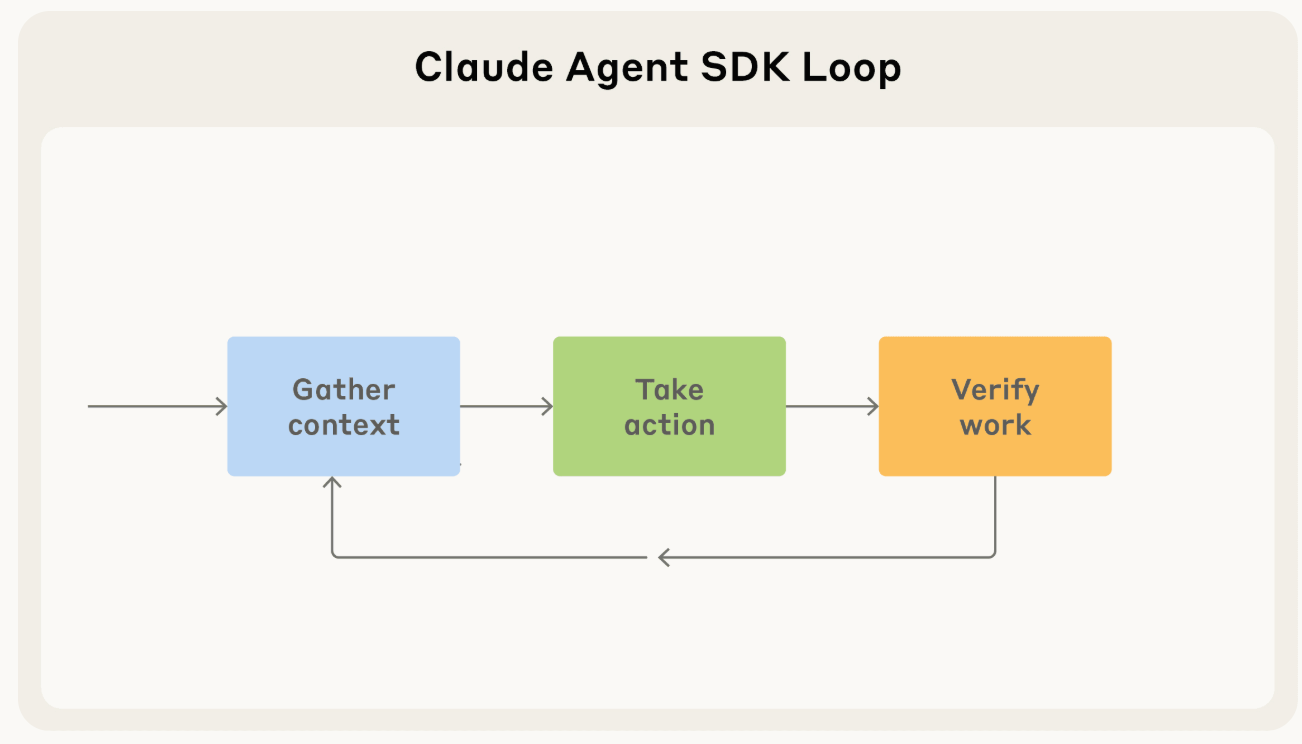
This strikes me as similar in spirit to many data-driven educational practices. In an analogous classroom example, teachers may do the same steps in a loop:
Gather Context. Assess what the student is currently able to do
Take Action. Give a lesson, or some other teaching intervention
Verify Results. Check for understanding via exit ticket or other lightweight assessment
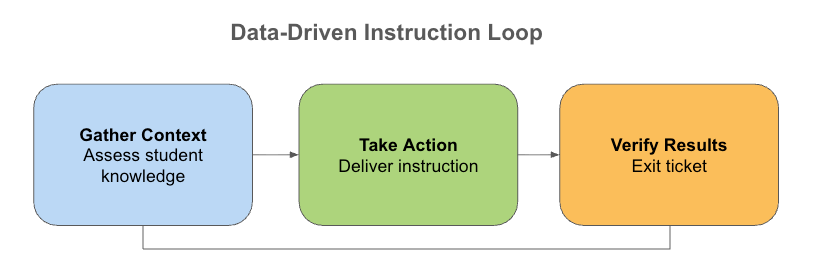
Today, there are some “adaptive” edtech products such as iXL, Khan Academy, eSpark, and many others that attempt to implement this loop- give a student a multiple-choice question to assess, followed by some lesson or problems, then repeat and adapt. But the standalone edtech products usually operate in their own silo, and with minimal input or interaction with the teacher beyond the initial assignment. When I was working at eSpark, we saw that a large majority of teachers never changed the default assignments - teachers mostly treated the product as something separate from their core practice.
AI agents can extend, rather than replace, teachers
Future AI educational agents may not be separate products. Rather, as they gain more context about the classroom, they can become an extra set of hands that extend the teacher’s intent, just as Claude Code provides leverage to engineers. Imagine an AI agent that could apply the teacher’s instructions to 30 different students at the same time. What if a teacher could identify the broad goals of a lesson, and then an AI agent can handle tailored interventions, still with guidance, permission and oversight from the educator?
The ultimate goal isn’t just efficiency, but rather empowerment. If more mundane tasks such as collating data and preparing individualized lesson plans can be offloaded, then perhaps teachers can spend more of their day in a flow state, focusing on really getting to know the students and working at a higher strategic level about how to address everyone’s needs.
The good news is that there are many experiments underway to make this sort of thing a reality. In my next newsletter, I will surface some real-world examples of AI agents in education - both in research and in practice - that are being used today around the world. Stay tuned and subscribe for more!